Video evaluation on practical skills
Showing posts with label Unit 6 - Practical Skills. Show all posts
Showing posts with label Unit 6 - Practical Skills. Show all posts
Wednesday, 12 June 2019

Tuesday, 21 May 2019
Contingency Plan
Lighting:
Take my own lighting rig (small light box) in case the in building lighting isn't good enough to help keep noise of the footage to a minimum.
Weather:
For me this isn't an issue whilst recording as I will be in side, however I will have to check the weather updates so no gear or myself gets wet on the walk up to the studio.
Camera:
Charge the batteries the night before but take a spare with me in case they run out.
Take a spare SD card in case the first one gets full
3D Text Tracking:
If the 3D tracking doesn't go to plan, I can still do the video without it as it was an extra feature I wanted to add rather than a necessity.
Performers:
It'll be easier to shoot without them as it'll be easier to schedule and less paper work and it'll still look good as my original plans didn't performers.
Health and Safety:
Try to be as safe as possible to prevent injuries
if serious injuries do occur, call an ambulance, take them to a safer location and treat the injuries if possible.
Scheduling:
Agree on a time and day with Dave a week in advance and let him know about any changes if they happen to the time or day.
Take my own lighting rig (small light box) in case the in building lighting isn't good enough to help keep noise of the footage to a minimum.
Weather:
For me this isn't an issue whilst recording as I will be in side, however I will have to check the weather updates so no gear or myself gets wet on the walk up to the studio.
Camera:
Charge the batteries the night before but take a spare with me in case they run out.
Take a spare SD card in case the first one gets full
3D Text Tracking:
If the 3D tracking doesn't go to plan, I can still do the video without it as it was an extra feature I wanted to add rather than a necessity.
Performers:
It'll be easier to shoot without them as it'll be easier to schedule and less paper work and it'll still look good as my original plans didn't performers.
Health and Safety:
Try to be as safe as possible to prevent injuries
if serious injuries do occur, call an ambulance, take them to a safer location and treat the injuries if possible.
Scheduling:
Agree on a time and day with Dave a week in advance and let him know about any changes if they happen to the time or day.
Promotional Videos And Evalutation
Evaluation:
Overall I'm happy with the finished product of my promotional videos for Warehouse 18.
Although I had to abandon the idea of 3D tracking the text as there wasn't enough room due to the close ups, I feel that the videos still clearly show what it is you're buying in the rehearsal rooms and recording studio. After sending the initial videos to my client for feedback, he was pleased with them, asked for a longer video showcasing all of the rooms and said he is going to use them on his website and social media page (Facebook). Hopefully this will help him gain more bands to use the rooms and recording studio. The lighting in the room made the videos look a little bland and washed out but I managed to fix that with colour correction and levelling in Premiere Pro to give it more of a cinematic feel as well as adding in the letter box bars.


Friday, 12 April 2019
Test Footage
The plan for this test footage is to use 3D tracking to label the equipment in the room letting the audience know exactly what it is they're paying for even if it's not visible clear on screen the 3D tracking will help.
Thursday, 11 April 2019
Contact With Client
In person contact:
Me: Hey, Dave, I've got some college work that requires me to do a promotional video, would I be able to do one for you? I'm thinking of, doing one for each individual room you have and listing what you have to offer and how much the rooms are per hour and then doing one for the studio as a whole.
Dave: Yeah, that'll be good, when are you thinking of recording?
Me: Sometime within the Easter holiday, so within the next couple of weeks but I'll let you know more details over text.
Dave: Okay, thank you, I'll see you later.


Me: Hey, Dave, I've got some college work that requires me to do a promotional video, would I be able to do one for you? I'm thinking of, doing one for each individual room you have and listing what you have to offer and how much the rooms are per hour and then doing one for the studio as a whole.
Dave: Yeah, that'll be good, when are you thinking of recording?
Me: Sometime within the Easter holiday, so within the next couple of weeks but I'll let you know more details over text.
Dave: Okay, thank you, I'll see you later.


Friday, 8 March 2019
Locations

My house, private area, will be able to film without interruptions with good lighting too. Open spaces with big rooms, less chances of injury

Galley Common bridge on the dark track, relatively clear from people, very muddy, chances of injury due to slipping in the mud, rocks sticking out of the mud (could trip), glass, branches, falling from the bridge/high up.

Devils Drop bridge in Bedworth, alternative to the Galley Common Bridge, less clear from people than Galley Common, very muddy, chances of injury due to slipping in the mud, rocks sticking out of the mud (could trip), glass, branches, falling from the bridge/high up.

Meg's house, alternative to my house, private area, will be able to film without interruptions with good lighting too. Open spaces with big rooms, less chances of injury
Contingency Plan
Green Screen:
Use a bed sheet as a blue screen
Only use a close up - makes it easier to look realistic
Find a new way to end the music video - make it more suggestive
Bridge Location:
Two separate locations, one in Galley Common and one in Bedworth/Coventry
Or find a new way to end the music video - make it more suggestive
Weather Conditions:
A little bit of rain/cloudy will help set the mood, lighting doesn't have to be the best as inside we'll use artificial lighting and outside shots will be in black and white
Health and Safety:
Try to be as safe as possible to prevent injuries
if serious injuries do occur, call an ambulance, take them to a safer location and treat the injuries if possible.
Hardware:
Make sure all cameras and lights keep dry and full charged before shooting
Have spare batteries and SD cards ready
Scheduling:
Have extra days for recording certain scenes just incase people have to go earlier than they're needed for or the shots didn't go to plan
Props:
Don't smoke all of my cigarettes before hand
Make sure we have spare bowls/plates - break them safely, pick up any bits of broken bowls to prevent cuts and scrapes.
Use a bed sheet as a blue screen
Only use a close up - makes it easier to look realistic
Find a new way to end the music video - make it more suggestive
Bridge Location:
Two separate locations, one in Galley Common and one in Bedworth/Coventry
Or find a new way to end the music video - make it more suggestive
Weather Conditions:
A little bit of rain/cloudy will help set the mood, lighting doesn't have to be the best as inside we'll use artificial lighting and outside shots will be in black and white
Health and Safety:
Try to be as safe as possible to prevent injuries
if serious injuries do occur, call an ambulance, take them to a safer location and treat the injuries if possible.
Hardware:
Make sure all cameras and lights keep dry and full charged before shooting
Have spare batteries and SD cards ready
Scheduling:
Have extra days for recording certain scenes just incase people have to go earlier than they're needed for or the shots didn't go to plan
Props:
Don't smoke all of my cigarettes before hand
Make sure we have spare bowls/plates - break them safely, pick up any bits of broken bowls to prevent cuts and scrapes.
Friday, 15 February 2019


Wednesday, 23 January 2019
Film Studies Film and Evaluation
Failure
Directors: Jack Martin & Morgan Mills
Filmed By: Jack Martin & Morgan Mills
Thanks To: Dylan Barns & Max Everett
End of unit film using Freud's theory of the subconscious
Monday, 12 November 2018
New Wave Film, Brief And Evaluation
Brief:
From the research of my contextual studies of American New Wave, I've noticed that the main focus of their techniques is to break the rules of what then was traditional Hollywood cinema. The way they break the rules includes, handheld cameras; lack of/improvised narrative (or one that makes little sense); lots of jumpcuts; long cuts that continue even after the main focus has gone off screen; unusual camera angles; natural lighting; and non-actors.
For my own new wave film, I want to take the unusual camera angles and bring it into the spotlight with the entire film being recorded from a POV (point of view) shot. By doing this I could create a behind the scenes film where it shows a day in the life of a new wave filmmaker as he gets up, does his morning routine, meets his friends and they make a new wave film. I also want to add in shots of the person looking into a mirror holding the camera to remind you that you're watching a film (breaking the 4th wall). During editing, I want to create the morning routine into a montage with lots of continuous jump cuts almost enough to disorientate the viewer. For the audio and lighting, I want it to be all diegetic and natural to give a sense of realism.
Evaluation:
Due to the weather and confusion of meeting points, I managed to get my morning routine shoot sorted but the recording of the fake new wave film, unfortunately, didn't happen but recorded most of the day all from a POV shot and ended up with 40 minutes worth of footage that needed to be taken down to about 2 minutes. I took this into consideration and made my entire film into a montage of the day with a lot of fast-paced editing unless there was dialogue in there I wanted the viewer to hear. Even though my contextual studies were based on the American new wave, my film had more influence from the French new wave, with the black and white and French writing. I added those French title cards in as partially a little in-joke but as well to openly reference the fact the film isn't perfect and has mistakes. The title cards translate to "missing images" and "SD card full" this was due to the fact some clips I felt were unusable or took up too much time so they were "missing images" and my SD became full at the end of the day which is why I stopped recording otherwise I would have gotten a home routine recorded too. After I edited my video I got some feedback and everyone felt like I could add something else to make it more disorientating. So I rendered my footage and revered it, lowered the opacity, panned the revered audio left and the original audio right. this created a more disorientating effect especially when the audio starts to sink up in the middle of the film making it more chaotic and with headphones on, gives the viewer a tingling sensation throughout.
Sunday, 28 October 2018
Health And Safety
Studio Health And Safety

 When using the studio it is extremely important to follow correct health and safety procedures to prevent any damage to yourself and equipment.
When using the studio you need to ensure that all doorways and emergency exits are marked clearly and are not obstructed.
 Make sure no food or drink is in the studio at any time. This is to prevent any from being split as it can damage equipment, cause electric shocks or cause a potential slip hazard which could lead to injury to yourself and damage to the equipment if you were to fall onto it.
Make sure all wires are secured neatly away (no lose/hanging wires) as this could lead to tripping over wires, unplugging them, electrocution or even having wires tangle around your neck.
Keep hands away from the bulbs as they get very hot and could cause burns.
Be careful when lifting heavy equipment, always have someone to help you.
Only people that are needed in the studio should be in there, this is due to the studio being a confined area and other not knowing the correct procedures of the studio could cause injury to others or damage to the equipment
Wednesday, 17 October 2018
4 Hour Film Challenge - Edit To The Beat Of A Song
For this 4 hour film challenge we had to find/record footage and edit it all together to the beat of a song, so the could be a cut or something happening within the shot on the beat.
The song I chose was Mr. Blue Sky due to it's 4 to the floor beat and how it would juxtapose my footage of people getting hurt.
In total this took 50+ clips to edit into this and they're all unique which made the editing process that bit longer. Personally I feel as this challenge went better than expected as it was just something funny and goofy however I feel as some of the clips could have been a bit tighter with the beat and some critic I got was that there could have been some rhythmic variation throughout my edits.
I used speed ramping from the techniques I learnt to help keep clips in time with the song as well as unlinking audio to the video to have the impact noise at the same time as the impact happened. I had to do this due to the fact light travels faster than sound but having them both at the same time added more impact to the beat.
Monday, 8 October 2018
4 Hour Film Challenge - Unusual Perspective
The brief for this 4 hour film challenge was that we had to use an usual perspective. We came up with two ideas to chose from, an usual perspective on men where would interview woman about the "typical male" and then over exaggerate what they say through acting. Our second idea was to record from the perspective of a pesky wasp that kept following us through out the day/our trip into town.
This idea left us with the freedom of camera angles to be whatever we wanted as wasps are able to fly which let us use a handheld camera and let it be shaky and in obscure angles. During editing I tried to have a fly eye effect on all of the shots but I couldn't find a tutorial but I still wanted the shots to be distorted in a way so I used the warping tools to create a weird effect across the screen that humans wouldn't see naturally. The issue with recording outside were that some shots changed from being over to under exposed to due to moving in and out of the shade on a bright day. I also added a "voice over" to the wasp which was me saying "buzz" in many different tones and lengths which is what many people said had "made the video". During group crit it was said that this could have been improved by adding subtitles to what the wasp was saying and also having a scene where the wasp was bouncing off of a window trying to get outside. But Billy said and I quote "I don't know if this is shit or genius"
Friday, 5 October 2018
4 Hour Film Challenge - Doors And Match On Action
The brief we were given for this 4 hour film challenge was that we had to use a door and match on action shots. This could be as simple as someone walking through a door, recording it from two different angles and then matching up the angles in editing to have the person seamlessly walk through the door.
Our initial ideas ranged from someone changing moods every time they walked through a door, to every time they walked through a door they ended up in a different locations. We scrapped these ideas as they would be too time consuming. We finally all agreed on to have someone who has no idea how doors worked as this would be easy to film as well as comedic. When location scouting, we wanted somewhere with a glass door so we could see all angles on the action no matter what side of the door we were on. We also wanted a long corridor for the actors to have a long run up for the door as well as to be able to have a wide range of camera shots and angles to choose from. The idea for it to become a silent film was a happy accident due to the lack of dialogue we could think of for this short film. Although this worked out in editing, during group critic we were told the pass of the editing could have picked up as the film went on just like it would in the short films, they would walk unusually fast because the tapes were sped up which would have helped with our comedic approach.
I was proud of a lot of the camera angles, the rule of thirds and double framing. The only issues discussed within the group critic were that a couple of the match on action shots could have been tightened up a tiny bit more and the intro shots were slightly out of focus. One the I picked up on myself was the framing of when I have the door hit me in the face whilst opening it. The camera should have been aimed down a little lower or zoomed out a bit more as my head was coming of the bottom of the shot.
Tuesday, 18 September 2018
Lighting
Edge Lighting is commonly found in the studio as well as lots of films, famously in Noir. This technique is used to create a subtle or an obvious "edge" of light on the subject, usually split down the middle of the subject but for magazines and photo shoots it's used have light edge along the jawline.
This is a really simple and easy lighting to do. 90 degrees from the subject to create a shadow on one side of the face and light on the other creating a "split" or "edge" of light on the subject.
Rembrandt Lighting is highly used in studios. This lighting can be achieved in two ways. You can use a single light and a reflector or by using two lights but at different settings and angles (which is what I have done). This technique is popular in the studios because it produces images which appear both natural and fascinating with little equipment
This lighting is hard to achieve, I didn't get the full triangle under the eye. To solve this, I could have spent more time carefully moving the light and subject to achieve the correct lighting.
Butterfly Lighting is one of the oldest techniques for lighting the face of a subject. This technique got its name from the butterfly-shaped shadow it creates under the subject's nose as well giving more definition to the subjects cheekbones.
This lighting was one of the easiest to achieve however the lights weren't able to go up high enough to fully achieve the right lighting and harsh shadows under the nose. To fix this, I would have a light I can move higher up or lower my subject more.
This experimental lighting with the light directly under the subject created harsh shadows over his face with the lights hitting the lower parts of his face and just above his eyes.
Thuis lighting created a more extreme split effect with more of his face cover with the shadow.
This was my favourite lighting as it created a very ominous silhouette of the subject and creating a "heavenly" glow from behind him shinning through his hair.
The issue with this low key lighting is the ISO being high creating a grainy video.
This high key lighting is very easy to create due to the fact it's just natural light. The only issue is with natural light is depending on the weather and time of day, the lighting may not stay consistent and shots may look different in shoots. To solve this I'd take out a light source of my own, a diffuser and reflector to keep the lighting outside consistent.
Thursday, 13 September 2018
Shutter Speed, ISO And Aperture
Shutter Speed:
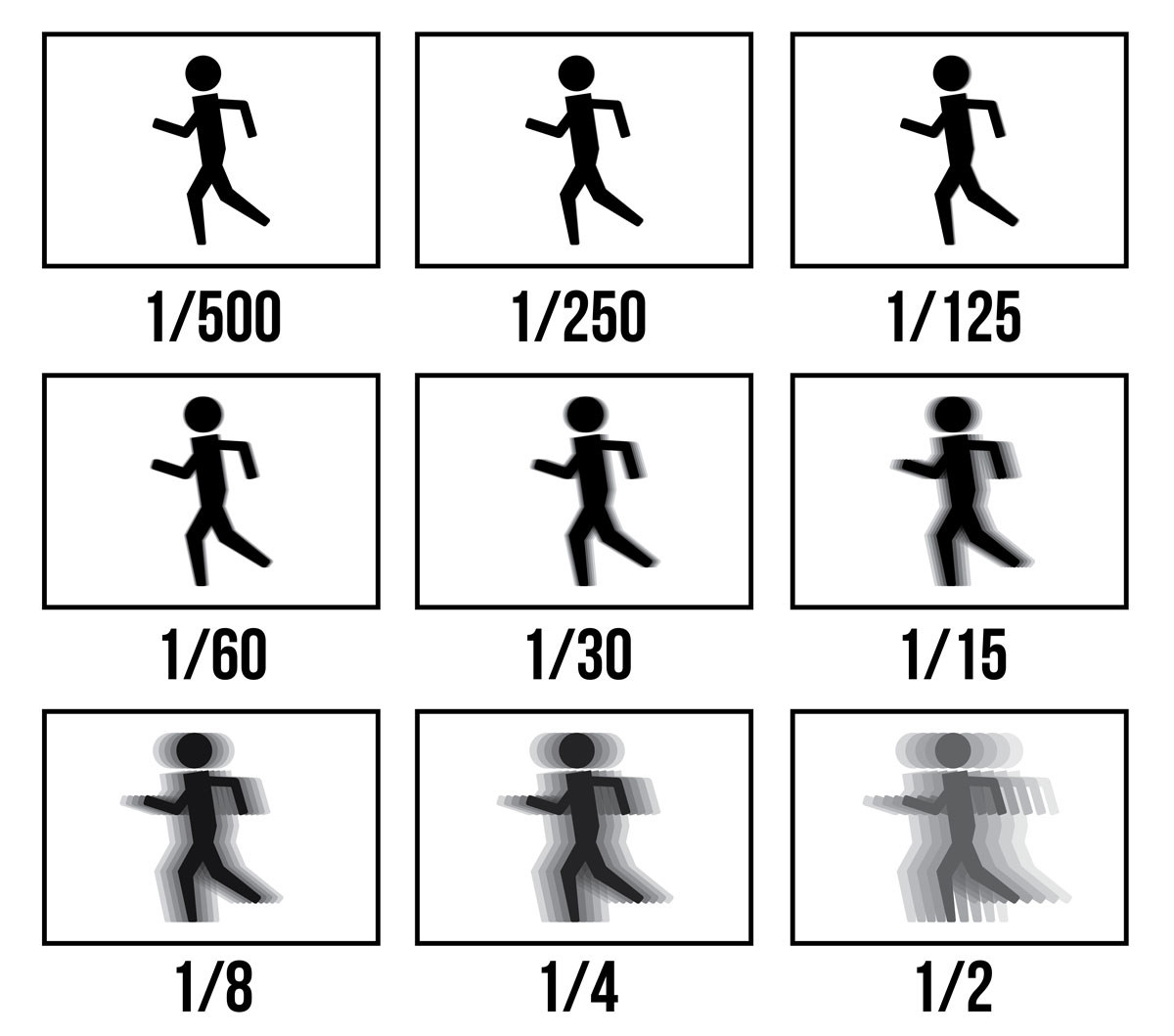
Shutter speed is the length of time your camera shutter is open for, exposing light onto the camera sensor.
When you use a long shutter speed, you end up exposing your sensor for a significant period of time. The first big effect of shutter speed is motion blur. If your shutter speed is long, moving subjects in your photo/video will appear blurred along with the direction of motion.
ISO:
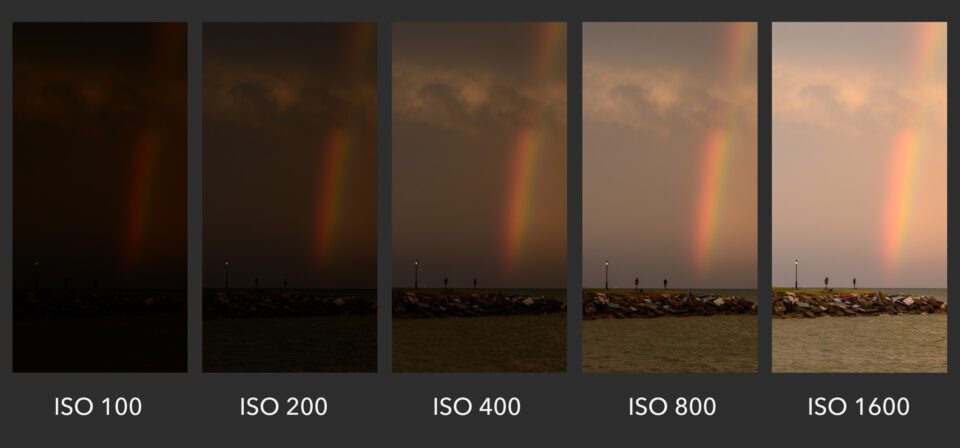
In very basic terms, ISO is simply a camera setting that will brighten or darken a photo. As you increase your ISO number, your photos will grow progressively brighter. For that reason, ISO is a good tool to help you capture images in dark environments or be more flexible about your aperture and shutter speed settings.
However, raising your ISO has consequences. A photo taken at too high of an ISO will show a lot of grain, also known as noise, and might not be usable. So, brightening a photo via ISO is always a trade-off. You should only raise your ISO when you are unable to brighten the photo via shutter speed or aperture instead (for example, if using a longer shutter speed would cause your subject to be blurry).
Aperture:
Aperture is a hole within a lens, through which light travels into the camera body. It is an easy concept to understand if you just think about how your eyes work. As you move between bright and dark environments, the iris in your eyes either expands or shrinks, controlling the size of your pupil. In photography, the “pupil” of your lens is called your aperture. You can shrink or enlarge the size of the aperture to allow more or less light to reach your camera sensor.
Aperture has several effects on your photographs. One of the most important is the brightness, or exposure, of your images. As aperture changes in size, it alters the overall amount of light that reaches your camera sensor – and therefore the brightness of your image. A large aperture (a wide opening) will pass a lot of light, resulting in a brighter photograph. A small aperture does just the opposite, making a photo darker.
The other critical effect of aperture is something known as depth of field. The depth of field is the amount of your photograph that appears sharp from front to back. Some images have a “thin” or “shallow” depth of field, where the background is completely out of focus. Other images have a “large” or “deep” depth of field, where both the foreground and background are sharp.

My first outdoors attempt. Doing a pull focus shot starting from the left wall and finishing on the roof to the right. ISO of 400 due to the shade and a smaller aperture to allow less light on from the wall and roof.
These next to videos are another pull focus in the graveyard. I feel as the videos are overexposed and more grainy with the 400 ISO but also went underexposed with a 200 ISO and I found it difficult to focus from the front grave to the back due to the change in light.
These next two videos are of the same angle but the first is overexposed with a 1600 ISO and the second is underexposed with a 400 ISO. I personally prefer the second video as the low ISO gives the video low-key lighting and has more of a horror effect to it.
The results of this experiment were as expected. The camera shutter speed at 1/30 had more motion blur than the one at 1/250. The only thing I would have changed is for the last train to be going at the same speed as the first two for a more fair comparison.
As you can tell this video is massively underexposed due to the low ISO with extremely poor lighting as I was using indoor lights as my video lighting
With the ISO of 1600, the wall is more visible but the with the light being indoors, the inside of the building starts to become washed out with the light.
This is outside with the camera facing away from the building. Anything below 1600 was pure black on the screen. the best result came from the ISO at 6400 but the video became grainy. To help resolve this issue I would have used better lighting with a lower ISO
With the F stop at 16, the subject (the bench) is in focus where the background (the wall and trees) are slightly out of focus so the depth of field is relatively shallow
With the F stop at 22 everything in this shot is in focus as the depth of field is deep. However, the subjects light exposure is a lot less than the backgrounds causing the subject to be much darker and a little grainy. This could be fixed with a light source aimed at the subject to help balance out this light exposure
With the F stop at 4 (the lens wouldn't go down to 2.8), the subject is clearly in focus whereas the background is entirely blurred out with just smudges of the colours blending together.
Shutter speed is the length of time your camera shutter is open for, exposing light onto the camera sensor.
When you use a long shutter speed, you end up exposing your sensor for a significant period of time. The first big effect of shutter speed is motion blur. If your shutter speed is long, moving subjects in your photo/video will appear blurred along with the direction of motion.
ISO:
In very basic terms, ISO is simply a camera setting that will brighten or darken a photo. As you increase your ISO number, your photos will grow progressively brighter. For that reason, ISO is a good tool to help you capture images in dark environments or be more flexible about your aperture and shutter speed settings.
However, raising your ISO has consequences. A photo taken at too high of an ISO will show a lot of grain, also known as noise, and might not be usable. So, brightening a photo via ISO is always a trade-off. You should only raise your ISO when you are unable to brighten the photo via shutter speed or aperture instead (for example, if using a longer shutter speed would cause your subject to be blurry).
Aperture:
Aperture is a hole within a lens, through which light travels into the camera body. It is an easy concept to understand if you just think about how your eyes work. As you move between bright and dark environments, the iris in your eyes either expands or shrinks, controlling the size of your pupil. In photography, the “pupil” of your lens is called your aperture. You can shrink or enlarge the size of the aperture to allow more or less light to reach your camera sensor.
Aperture has several effects on your photographs. One of the most important is the brightness, or exposure, of your images. As aperture changes in size, it alters the overall amount of light that reaches your camera sensor – and therefore the brightness of your image. A large aperture (a wide opening) will pass a lot of light, resulting in a brighter photograph. A small aperture does just the opposite, making a photo darker.
The other critical effect of aperture is something known as depth of field. The depth of field is the amount of your photograph that appears sharp from front to back. Some images have a “thin” or “shallow” depth of field, where the background is completely out of focus. Other images have a “large” or “deep” depth of field, where both the foreground and background are sharp.
Wednesday, 12 September 2018
Easy Rider Analysis
The scene starts with a medium four shot of the group - 2 men and 2 women all late 20s early 30s. This scene was shot with a 16mm camera giving it a grainy dirty look. This depicts the grubby lifestyle and situation they are currently in, drinking, smoking and taking acid in a cemetery. This scene is heavily accompanied by the sound of machinery making their dialogue almost inaudible. This scene is shot in a linear style with the same camera angle until the group take the acid tabs. Once their acid tabs settle into their systems we cut to a low angle shot of an old rundown build with the hand half camera slowly panning from left to right soaking the scene in lens flairs as a religious speaker talks about heaven. Heaven is usually depicted as a blinding white light when you die which matched the lens flairs and dialogue on in this scene. During this highly experimental stage, the director and camera crew begin to break standard filming rules that were set during the time of their filming like zooming directly into the sun. This is all done to remind the audience their watching a film rather than immersing them into it. The use of relatively fast pace editing, the non linear scenes going forward and backwards in time repeatedly within a small amount of time is supposed to represent the acid trip the group is on and give the audience the confusion and the disturbance of this acid trip that the group themselves would feel. As the cast of this production actually took acid for this scene everything that happens in unscripted making this acid trip and the actions of the cast that more authentic.
Subscribe to:
Posts (Atom)

-
 Close up - on gear Pull focus Panning Establishing shot - The outside of the studio Mid shot Mid long shot
 -
This promotional video is for Apple's new iPhones, the XS and the XS Max. It starts with a side on view of the two phones on top of ...


